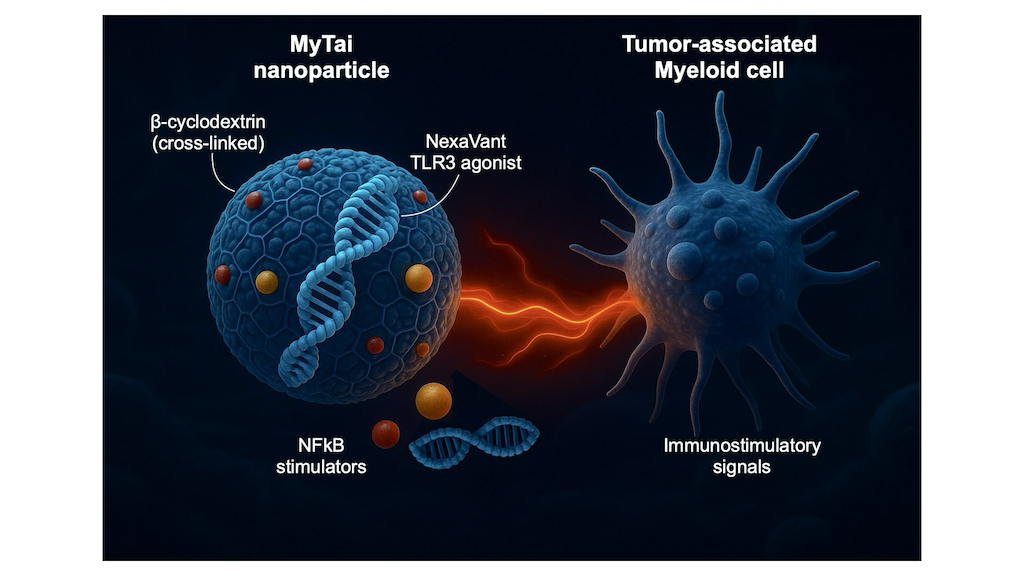
Reprogramming Tumor-associated Myeloid Immunity through MyTai
A multifunctional nanoplatform for potent and safe cancer immunotherapy
Most cancers create immunosuppressive environments dominated by tumor-associated myeloid cells that silence T-cell activity. To overcome this, our team developed called MyTai (a myeloid-targeted immune enhancer cocktail) that reprograms these cells into powerful immune activators.
In a study published in ACS Nano (2025), the team introduced a carbohydrate-based nanoparticle system that combines a refined viral RNA agonist (NexaVant, NVT) with two small-molecule immune stimulators: R848 (a TLR7/8 agonist) and LCL161 (a non-canonical NF-κB activator). Unlike lipid nanoparticles, MyTai’s cyclodextrin-based carrier avoids cationic lipids, dramatically reducing systemic toxicity while maintaining efficient delivery to tumor-associated macrophages and dendritic cells.
Once internalized, MyTai triggers multipronged immune activation through TLR3, RIG-I, and NF-κB pathways, leading to robust IL-12 signaling, dendritic-cell maturation, and strong CD8⁺ T-cell responses. In mouse models of colon, pancreatic, and brain cancer, three intravenous doses completely eradicated tumors and generated long-term immune memory, with no detectable systemic or neurological toxicity.
This work establishes MyTai as a new generation of safe, multifunctional immunostimulatory nanotherapeutics, offering an alternative to conventional lipid-RNA systems. Its modular design could be readily adapted for mRNA vaccines, combination immunotherapy, and future clinical translation.